



A Day in the Life of a First-Year Student at the College of Golf
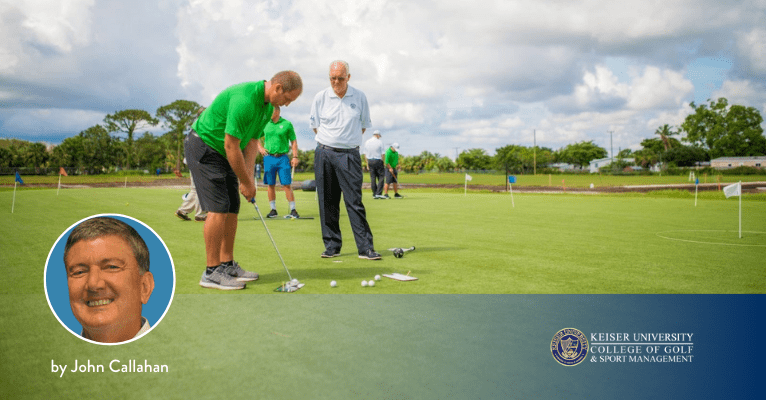
By John Callahan, Keiser University College of Golf Professor and PGA Professional
For most first-year college students, the transition to higher education is a mix of excitement, uncertainty, and discovery. But for a first-year student at Keiser University’s College of Golf, the transition includes a unique additional dimension: the commitment to mastering a sport that blends finesse, discipline, physical control, and mental strength.
Beginning your first year in the Golf Management program means navigating not only new classrooms, new expectations, and new social environments, but also a new level of athletic responsibility. Every day becomes a balancing act—one that tests time management, focus, and passion for the game.
This article is the story of a first-year student named Alex, whose daily routine at the College of Golf reveals the challenges, growth, and rewarding rhythm of balancing practice and academics during the first year of a specialized program.
Morning: A New Routine Takes Shape
At Keiser University’s College of Golf, mornings come early. During first-year orientation, instructors warn students that early practice sessions will become a regular part of life in the program. At first, Alex found this intimidating – he was used to early mornings before high school tournaments, but this was different. This new routine wasn’t just an occasional early wake-up – it was a lifestyle.
By 6:30 a.m., Alex is already up in his lakeside dorm room, stretching and preparing for the day. Although he’s still adjusting to college life, he’s beginning to appreciate the structure that practice provides. He grabs a full breakfast at the Student Union Building, double-checks his golf bag, and makes the short walk to the practice facility.
The morning air is cool, and the outdoor golf range is calm—a perfect setting for a freshman still learning the program’s expectations. The College of Golf boasts state-of-the-practice technology: high-speed swing cameras, launch monitors, simulators, putting labs, and indoor training bays. For Alex, it all felt overwhelming at first. But as the weeks pass, he is slowly learning to embrace these tools rather than fear them.
His practice begins with the fundamentals. First-year students in the program spend a lot of time reinforcing foundational techniques. Even if they arrive with strong amateur golf experience. Alex starts with stretching, alignment drills, and short wedge shots to warm up his muscles. He then works through his bag, focusing not on hitting as many balls as possible, but on creating intentional, repeatable motions.
At 8:30, he meets with a PGA-certified instructor. These check-ins are incredibly valuable. While upper-level students may come into practice with precise training plans, first-year students like Alex are still learning what productive practice even looks like. Today’s focus is on the grip and maintaining posture. Alex listens carefully, knowing that forming good habits early will set the foundation for the rest of his college career.
By 9:10, he’s packing up his clubs and heading toward his first academic class of the day, feeling both awake and energized.
Transition to Academics: Finding a New Academic Identity
Moving from physical practice to academic focus can be challenging for first-year students. The mental shift required takes time to develop, and Alex is no exception. When he first arrived at Keiser, he underestimated how difficult it would be to balance the golf program with the school’s academic expectations. But now, several weeks into the semester, he’s starting to adapt.
Alex’s first class of the day is Golf Swing Fundamentals. This course provides first-year students with the baseline knowledge they’ll need for more advanced classes later. They review swing mechanics, ball flight laws, equipment basics, and introductory coaching concepts. Unlike amateur golf, which is mainly about competition, this course teaches Alex how to understand the game as a future professional. He begins learning not just how to play, but how to analyze swings, explain concepts, and communicate corrections.
Next is English Composition. While not specific to golf, this class reminds Alex that he is still a full-time student, responsible for mastering traditional academic subjects. The balance can be overwhelming at times – especially on days when he feels mentally drained from practice—but he is learning quickly that discipline in academics is just as important as discipline in sport.
After English Composition, he heads to Success by Design, a course designed to help new students adjust to college life. This course becomes a quiet anchor in Alex’s week. Here, he has learned practical strategies for managing stress, staying organized, using campus resources, and asking for help when needed. For a freshman balancing the demands of a specialized athletic program, these lessons are invaluable.
Lunch and Social Life: Finding Community Early On
By noon, Alex is ready for a break. At first, lunchtime felt lonely—being a freshman means starting from scratch socially. But over time, he has found friends within the program. Now, he usually meets with a group of other first-year students on the patio outside the student center.
The conversations range from swing tips to tournament stories to assignment frustrations. Because nearly everyone in the program shares a passion for golf, friendships form naturally. Some students grew up playing competitively; others discovered the game later. Some want to be teaching professionals; others hope to manage private clubs or work in equipment fitting. This diversity makes lunchtime conversations both fun and inspiring.
The first year can be overwhelming, but this sense of community helps ground Alex. He realizes he is not alone in the balancing act – everyone is learning how to integrate golf practices, academic classes, fitness training, and personal life into a single, sustainable routine.
Afternoon Classes: Expanding the Foundation
The afternoon often includes more specialized courses related to golf management. For first-year students, this is when they begin dipping their toes into the professional side of the industry.
Today, Alex’s afternoon begins with Golf History. This class explores the origins of the game, the evolution of equipment, and the rise of professional tours. At first, Alex didn’t think this class would interest him, but he’s grown to appreciate how understanding the sport’s past gives the present more meaning. The legends, traditions, and innovations of golf shape how modern professionals think about the game.
By 2:30 p.m., classes wrap up. Many first-year students would feel ready to relax, but Alex knows the day isn’t over yet.
Afternoon Practice: Learning to Practice with Purpose
Many days, Alex returns to the practice facility after classes. First-year students are still learning how to structure independent practice time, so the coaches often provide guidelines or recommended drills. Alex appreciates this support—without it, he might hit balls aimlessly, a habit that doesn’t lead to improvement.
Today’s practice is focused on the short game. Alex begins with putting drills to improve distance control. Then he moves to chipping stations set up around the green. First-year students are taught early on that improving short game performance is the fastest way to lower scores, so Alex places a lot of emphasis on these sessions.
He also spends time in the indoor simulator room, reviewing the numbers from his morning practice: club path, face angle, carry distance, and spin rate. While he is still learning to interpret the data, he’s beginning to understand how technology can guide improvement.
Some days, he plays a few holes. Other days, he practices alone. And occasionally, he joins an informal competition with classmates, which helps simulate the pressure of tournament play. As a freshman, Alex is discovering that becoming a better golfer is not just about physical skill – it’s about patience, self-awareness, and the willingness to learn from mistakes.
By the end of practice, he feels tired but fulfilled. Each session, no matter how challenging, brings a sense of progress.
Evening: Homework, Rest, and Reflection
After returning to the Student Union for dinner, it’s back to the dorm where Alex transitions into his evening routine. The first year demands solid academic planning—assignments in general education courses, mixed with projects in golf-specific classes. Alex usually begins with whatever is due first, whether it’s an English Composition worksheet or a reading assignment for Golf Swing Fundamentals.
He practices good study habits he learned in Success by Design Class: breaking significant assignments into smaller pieces, using a planner, and studying in short, focused sessions instead of long, draining ones. He notices that his time management skills have already improved since the beginning of the semester.
Once homework is done, Alex spends a little time reviewing the notes from his practices. First-year students are encouraged to keep a golf improvement journal. In it, Alex writes about what drills helped, what felt off, and what goals he wants to focus on tomorrow. These reflections not only reinforce learning but also help him manage frustration on difficult days.
Before bed, he stretches to keep his body healthy and prevent soreness. The physical demands of daily practice were a shock at first, but he is adapting. The first year is full of adjustment—physically, academically, socially—and Alex is slowly finding his rhythm.
By 10:00 p.m., he sets his alarm and turns out the light, ready to start again in the morning.
The Freshman Challenge: Learning How to Balance
The first year at the College of Golf represents a significant transition. Students like Alex face several challenges that define the first year:
- Learning how to manage time effectively between practice, classes, and homework
- Adjusting to new academic expectations and developing college-level study habits
- Accepting constructive criticism from instructors on both swing mechanics and professional behavior
- Developing physical endurance to handle daily training
- Building confidence in a new environment
- Finding community among peers who share similar goals
Through these challenges, first-year students build the habits that will support them throughout the rest of the program. They learn how to advocate for themselves, plan their schedules, and approach improvement with consistency rather than emotion.
Freshman Growth: What the First Year Teaches
Though the days can feel long and demanding, the first year is also a time of tremendous growth. Students learn:
- Discipline through early mornings and structured routines
- Adaptability as they adjust to new coaches, new academic expectations, and new feedback
- Professionalism—how to present themselves confidently within the golf industry
- Communication skills across a variety of academic and athletic settings
- Self-awareness as they reflect on strengths, weaknesses, and progress
The first year lays the foundation. It teaches students what the program expects and what the industry requires. It challenges them, supports them, and prepares them for the more advanced responsibilities that await.
Conclusion: A Freshman’s Journey Begins
A day in the life of a freshman at Keiser University’s College of Golf is dynamic, demanding, and deeply rewarding. It is a journey defined by early-morning practices, dedicated academic work, and the thrill of developing as both a student and a golfer. Learning to balance practice and academics is not easy – especially during the first year, when everything is new, and expectations feel high.
But through these experiences, students grow remarkably. They learn not only about golf, but about themselves. They discover how to manage their time, persevere through challenges, and maintain their passion for the sport even as responsibilities multiply.
For Alex and his fellow first-year students, each day is a step forward—toward mastery, professionalism, and a future in a sport they love. The first year doesn’t just teach them how to be better golfers; it teaches them to become resilient, capable golf professionals, laying the foundation for their careers.